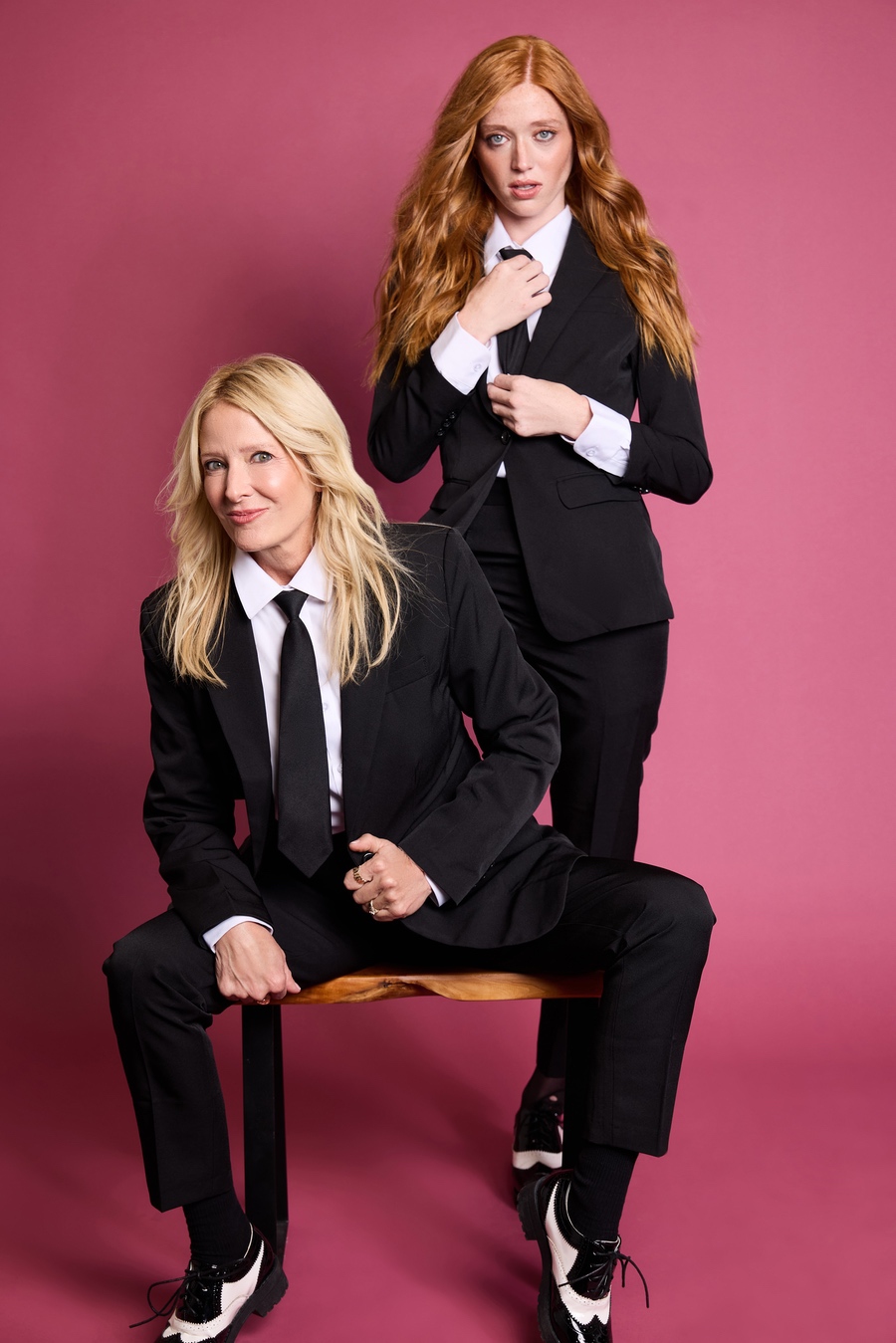
As the founders of Two Other Trees, filmmaking partners Chloe Ray and Renee Story are emerging as powerful voices in the new era of independent cinema. The duo has built a creative rhythm that elevates every project they touch. Their latest series, Noble Homes, exemplifies that balance. What began as a workplace comedy evolved into a grounded, smartly comedic exploration of gentrification, community displacement, and the contradictions woven into small-town real estate. And with Two Other Trees designed to champion overlooked storytellers and create high-quality work outside traditional studio constraints, Chloe and Renee are carving space for a more accessible, artist-centered future in filmmaking. We sat down with the mother–daughter team to talk about their creative synergy, the evolution of Noble Homes, and the vision behind the company reshaping how independent stories come to life.
As a mother–daughter filmmaking team, what was the moment you both realized that storytelling was something you wanted to pursue together rather than individually? We’ve both had the opportunity to work on projects independently of one another, kind of discovering through the process how much more effective we can become when we put our heads together. We both have major aspirations and work ethics, and when you can rely on your partner to match the time and work that you put in, there is a special kind of trust built among one another. We will likely continue to do projects both together, and separately, but there is an undeniable asset in one another that makes us genuinely want the other person involved in order to make the best product possible.
How do your strengths complement each other? Where do you each lead, and where do you lean on the other most during a project?
We both have such different skill sets that work together so nicely. Renee comes from the management world. She is the queen of making connections, staying informed, and building the best slate of people and places for a project. Chloe’s background is on set. She not only runs a safe, positive, and efficient production, but is deeply in tune with script analysis, effective coverage, editing techniques, and acting theory. Together, we are able to stretch indie budgets and build projects that feel ready for the screen.
Your film Noble Homes captures grounded, community-rooted storytelling. What sparked the idea, and what conversations were you hoping to initiate with this project? From the beginning, Renee wanted to make a workplace comedy. She knew she wanted to use her mother’s legacy to build up her community- bringing on her acting clients to star, Chloe to direct and produce, and literary client Bridget Bell McMahon, to write. When a Real Estate comedy was put on the table, it fell into place too perfectly between the affordable settings we had access to, the attached cast members, and its subtle way of honoring Renee’s mother/Chloe’s grandmother’s favorite HGTV shows. When we began combining our ideas around the premise, the one thing missing was obvious: It felt irresponsible for us as filmmakers to create this show without the acknowledgement of the community members who have been displaced due to gentrification and the millions who cannot afford a home themselves. Chloe sent over one of her favorite South Park episodes, in which Cartman sells the series regular’s houses to “city folks” who only spend a fraction of their yearly time there – something that is very common in the vacation towns I grew up around. We both instantly saw the potential of using satire and comedy to explore this ever-so-real and relevant topic. Suddenly, the show took control of us, and told us exactly what it needed to be. The complexity of our lovable cast also being community antagonists, felt authentic, relatable, and real-life absurdities began to write episodes themselves.

You founded Two Other Trees to tell “grounded, emotionally resonant stories.” What was the driving vision behind creating a production company rather than working project-to-project?
We really found a knack for creating independently, and building up our personal assets and experience, in order to cut down on costs with every production. In-house, we are able to film high production value content on a dime, so we are extremely collaborative with creatives to find a route in which their story can be made despite the size of their budget. It can be disheartening sitting on stories for years and there’s a massive market for people who want to work outside
the traditional distribution models to get their stories out there now. I love that Two Other Trees can help create access for people who might otherwise not be able to make their film, and by coming on as a production company across several projects, I am hoping to build more assets, tools, and connections to support more filmmakers.
What types of stories or communities do you feel most called to represent through Two Other Trees?
We hope Two Other Trees can represent overlooked voices. We feel called to help storytellers make their stories their way, without the limitations of working with a big studio. We don’t have the power to overhaul the industry, but we can remove barricades and work towards making as many productions as we can as accessible as possible.
How do you hope Two Other Trees contributes to the revitalization of independent filmmaking and the next generation of emerging talent?
There are a lot of budding independent production companies right now fighting the same fight – finding ways to break down production obstacles and get their stories made, rather than waiting around for permission. It’s really empowering for artists to take control of their stories from beginning to end, and I think an audience really responds to the vulnerability and honesty that emerges from that process.
Do you have any creative rituals or non-negotiables you rely on when developing new projects or navigating creative blocks?
Our only non-negotiable is safety. We work to honor artist’s visions and stories, which often means being flexible and open to new ways of doing things. As long as we can protect the crew making it happen and ensure they are taken care of, nothing is off the table.
Walk us through your creative process as a team—how does an idea become a script, and then a world you’re both ready to bring to life?
Noble Homes was the rare occasion that production was locked before locking down script. A more typical workflow for us starts with a solid and locked script before any work begins. When a script is brought to us, we typically start with a rough schedule and a few budget tiers in order to lay out what is possible, and how we can make the best product with what we have. From there we build a passionate team and get to work cutting costs through sponsorships, discounts, and donations – fighting for the best before compromising.
You have two exciting projects coming up—Bugs and Creepy AF. What can you share about the stories you’re exploring with these projects?
Creepy AF is a proof of concept for a feature script that recently won the Nashville Pitch Festival. It’s a darkly fun Gothic fairy tale. Imagine if Michael Myers had a teenage son who ended up in high school with the cast of Mean Girls—and through a twist of fate found himself on a rom-com adventure with his complete opposite. We’re currently in post-production on the proof of concept and aiming to secure funding to bring the full feature to life as soon as possible.
BUGS follows the Bardot Sisters—three gifted young women whose understanding of themselves is shattered when they learn they were genetically modified at birth. This project has been a true labor of love. Unfortunately, the Eaton fires caused a significant setback just as we were nearing completion. We’re now deep back in post, rebuilding and refining, and are on track for a 2026 release.

For readers who want to follow your journey and support your upcoming work, where can they find you online?
Follow our journey via Social Media- @twoothertrees.You can also find project updates & get in touch at twoothertrees.com. To keep up with our personal work, follow us on Instagram: @chloeraywarmoth and @renee.ann.story. Thank you so much for having us today!
Photo Credit:
Photographer: Cathryn Farnsworth (https://www.cathrynfarnsworth.com/)
HMU: Cherie Combs (https://www.cheriecombs.com/)
Nails: Julie Ta Melody Nails Chloe
